Why Same-Day Vape Delivery Moves Differently in One Singapore Estate
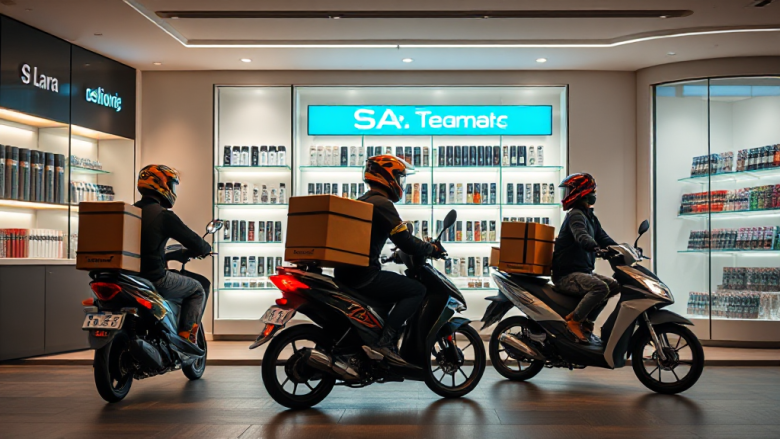
At 6pm on a weekday, the corner of the estate’s main road and the bus stop access lane is a small theatre of logistics. Three riders idle in a loose row, engines off, phones angled toward their handlebars. A fourth swings around the taxi stand and disappears into the service road behind the wet market. Two blocks away, on a parallel street that looks almost identical on a map, a resident is refreshing a tracking page for the third time. Both customers ordered around the same hour. Both paid for the same express option. One gets a knock on the door in twenty minutes. The other waits past nine. The difference is rarely the shop, the rider or the brand. It is the estate itself — its building types, its lift lobbies and the way its roads refuse to move in a straight line. That gap between two addresses is exactly where Vape delivery sg services either shine or stumble, and understanding it makes you a much smarter customer.
Layer One: Building Type Decides Whether a Rider Can Even Reach Your Floor
Singapore’s high-density estates are not uniform. Within a single neighbourhood you can find 1970s walk-up blocks, 1990s point blocks with a single lift core, and newer integrated developments where the residential tower sits on top of a mall and a transport hub. Each of these creates a different physical path between the road and your door.
Walk-ups are the quiet killer of same-day timing. A rider who has to climb eight flights of open-air stairs cannot carry multiple orders efficiently, and many will simply call from the void deck and ask you to come down. That call is not laziness; it is arithmetic. One staircase climb can consume the same time as three lift-served deliveries in the next block. If you live in a walk-up, your realistic delivery window is longer than your neighbour’s in a lift-served block, even if your addresses are 200 metres apart.
Point blocks with a single lift core introduce a different problem: queuing. At peak hours, one lift serving twelve floors per block means riders, residents and food couriers all converge on the same lobby. A rider who arrives during the evening lift rush can lose five to eight minutes just getting up and back down. Multiply that across a route of six drops and you have a delivery that drifts an hour late without anyone doing anything wrong.
Integrated developments are usually the fastest addresses in the estate — but only if the rider knows which lobby to use. Towers attached to malls often have a residential drop-off point that is not visible from the main road, and a rider who takes the wrong turn into a loading bay can lose ten minutes circling. This is where local stock and local knowledge matter. A service that keeps inventory in the estate and uses riders who already know the tower layout will consistently beat one dispatching from across the island. That is the practical advantage behind lana vape sg operations that hold ready stock nearby rather than promising delivery from a distant warehouse.
Layer Two: Lift Access, Security and the Two-Minute Rule
The second layer of friction is invisible on a map but very real at the door: access control. Many estates now require visitors to be buzzed in at the lift lobby, and some newer blocks route all deliveries through a concierge or a parcel room. That single design choice reshapes the entire delivery experience.
In blocks with a free-access lift lobby, a rider can move from kerb to door in about ninety seconds. In blocks with a gated lobby, the same trip takes four to six minutes because it depends on you answering the intercom, then the rider waiting for the lift, then finding your unit. If you are in the shower or on a call, the rider waits — and every minute spent waiting at your block is a minute stolen from the next customer on the route. This is why two neighbours in the same estate can experience wildly different service quality from the same shop on the same evening.
Discreet packaging adds one more variable. A plain parcel that looks like any other online order draws no attention in a shared lobby, which matters to many adult customers who prefer not to advertise what they are receiving. But a bulky or oddly shaped package can prompt a concierge to ask questions or require signing, adding delay. Retailers who understand estate life keep parcels compact and neutral for exactly this reason. If you want to see how a well-run operation handles this, Singapore lana vape customers frequently note that the packaging blends in with ordinary e-commerce deliveries — which is precisely the point. Singapore vape delivery
There is also the lift-return problem. A rider who takes the lift up must often wait for it to come back down, especially in blocks where the service lift is shared with moving crews and renovation workers. During the day, this can add two to three minutes per drop. In a route of eight drops, that is twenty minutes of pure waiting — enough to push the last customer well past the promised window.
Layer Three: Road Layout, One-Way Systems and the 6pm Squeeze
The third layer is the street itself. Older estates were not designed for the volume of two-wheeled delivery traffic they now carry. Many have one-way loops, narrow service roads, and car parks that force riders to dismount and walk. A rider who can park directly outside your block saves time; a rider who must park in a multi-storey car park and walk through a linkway loses it.
The 6pm squeeze is the clearest example. School pick-ups, residents returning from work, and delivery riders all compete for the same short stretch of road. In estates where the main artery has only one lane in each direction, a single illegally parked car can stall an entire route. Riders learn to avoid these roads at peak hours and take longer but emptier back routes — which is why your delivery sometimes arrives from a direction you did not expect.
Weather amplifies everything. A sudden downpour turns open-air walk-ups into slower drops, makes riders more cautious on wet service roads, and pushes everyone into the same sheltered lift lobbies at once. On a rainy evening, the difference between a twenty-minute delivery and a fifty-minute one is often just which side of the estate the rain hit first.
This is why route planning in a dense estate is genuinely skilled work. A good operator groups drops by building type and lift access, not just by postcode. They send the walk-up drops to riders who are prepared for stairs, and the integrated-tower drops to riders who know the lobbies. When that planning is done well, Lana vape same day delivery can feel almost instantaneous in one block and merely prompt in the next. When it is done poorly, the same order becomes a lottery.
What Residents Can Actually Do to Get Faster Deliveries
You cannot redesign your estate, but you can work with its quirks. A few practical adaptations make a measurable difference:
- Give the block and lift lobby, not just the unit number. If your estate has multiple lift cores, state which one. Riders who guess wrong lose five minutes immediately.
- Say whether you are in a walk-up. If stairs are involved, mention it in the order notes so the rider can plan the route and carry fewer items at once.
- Be ready before the window opens. The single biggest cause of delay is the customer not answering the intercom. If you know a delivery is coming, keep your phone nearby.
- Choose a meet point if your lobby is gated. Many residents in secure blocks arrange to meet at the lift lobby or void deck, which cuts several minutes off every drop.
- Order from local stock. A shop that holds inventory in or near your estate can dispatch in minutes rather than scheduling a cross-island run. This is the difference between a same-day promise and a same-day reality.
- Avoid the 6pm to 7pm crush if you can. If your schedule allows, a mid-afternoon or late-evening order usually moves through the estate far more smoothly.
- Keep parcels discreet. A neutral package moves through shared lobbies without friction, which benefits everyone on the route.
None of this is about the product itself. It is about the last 300 metres — the part of the journey that no tracking page ever shows you. A Sg vape shop delivery that understands your estate’s building mix and road rhythm will simply outperform one that treats every address as a pin on a map.
So the next time you stand at that 6pm corner and watch riders queue, remember what you are actually looking at: a live map of your estate’s friction points. The neighbours who get their parcels first are rarely luckier. They live in blocks where the path from road to door is short, and they order from services that know it. Learn your own block’s pattern, share the details that matter, and the gap between you and the faster side of the estate narrows quickly.